


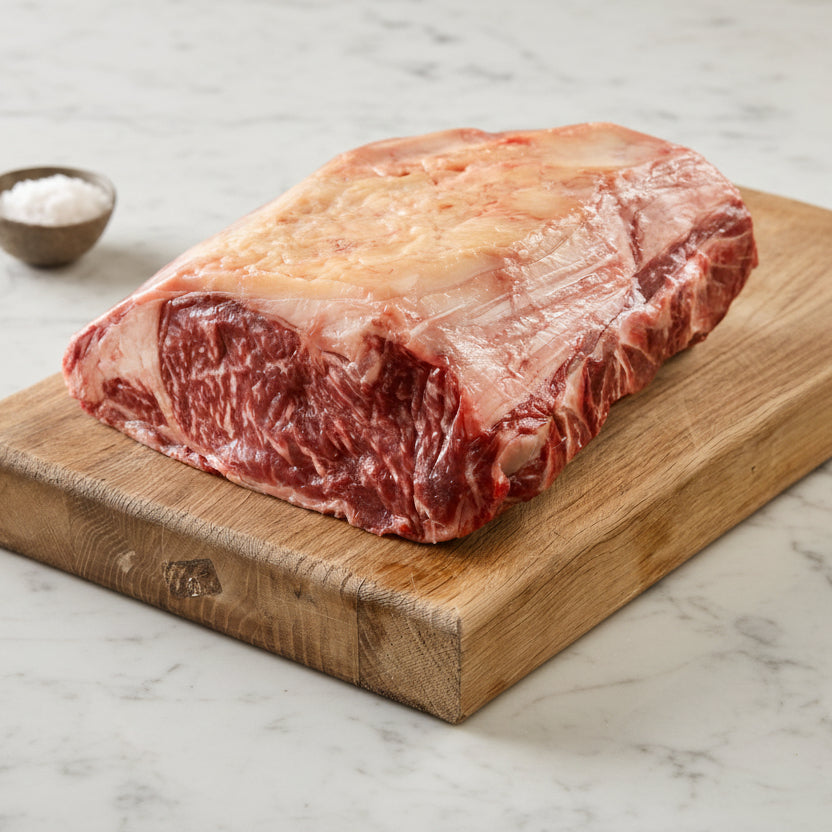
Wagyu British Beef Whole Striploin | ±6kg
- Regular price
-
£595.00 - Regular price
-
£595.00 - Sale price
-
£595.00
Couldn't load pickup availability
Description
Wagyu Beef Striploin, or Sirloin, comes from along the spine in the hindquarter of the animal. A muscle that doesn't do much work, it is tender with a thin covering of fat protecting the stunningly marbled meat beneath, providing the equilibrium between traditional buttery, long-lasting finishes found with Japanese Wagyu and the more beefy, iron flavours of grass-fed UK beef. The olive feed creates an umami taste in the beef, a sumptuous savoury flavour adding depth and richness. For anyone wanting the delicious flavour of UK Wagyu Beef, but not the more fatty steaks such as a Ribeye, will find the Striploin ticks every box.
This Striploin can be cut down into 250g steaks or into larger roasting joints for Sunday dinners and special occasions. With the beautiful piece of fat covering, we love to sear the fat in the frying pan first to get all the delicious flavour to then fry the steak in.
- Freedown Hills F1 Wagyu beef (50% Wagyu - 50% Holstein)
- Reared in Yorkshire, UK
- Olive-fed
- ±6kg, £99.17/kg
- Serves up to 20 people
- Chilled
We strive for precision with every hand-cut order. Please note that natural variations occur, and we maintain a weight tolerance of ±8%, which is reflected in our pricing. Should a selection fall outside this range, we will contact you directly to ensure your order meets our standards and your expectations.
Frequently asked questions
Use collapsible tabs for more detailed information that will help customers make a purchasing decision.
Ex: Shipping and return policies, size guides, and other common questions.
What does olive-fed mean?
How does it taste compared with Japanese Wagyu?
Can I freeze it?
Where does it come from?
Cooking Instructions
Storage
Delivery
SHIPPING RATES (UK mainland only excl. Highlands)
| Orders over £85 Express By End of Day (Tues-Sat) | FREE |
| Orders under £85 Express By End of Day (Tues-Sat) | £8.50 |
| Express by 1PM (Tues-Fri) / by 1PM for Scotland | £11 |
| Express Saturday by 1PM / by 1PM for Scotland | £22 |
Our delivery service covers all UK mainland addresses and is fully tracked using trusted courier DPD.
We aim to deliver all orders, excluding the Highlands & Islands, via next-day service; however, please allow up to 48 hours when placing your order in case of any courier delays.

Video

Born & Raised in Yorkshire

Let customers speak for us

Repeat customer - excellent quality!! I am from Asia and these cuts are hard to find, this is very good. Would recommend.

Phenomenal, cooked this one whole and put it under a very hot grill to finish off the fat cap amd turned out absolutely amazingly.

Great quality, best for barbecue
all my friends loved it
Very decedent with the amount of fat running through the meat in a very good way. Completey different experience to other pork...

Really excellent cut. Flavour & texture are absolutely worth experiencing. Works perfectly on the BBQ. Will be ordering again regularly.

We use this with the Wagyu Beef and Pork Belly BBQ for the dipping sauce, tastes great. We will buy again.

Yet again fantastic quality of meat, brilliant service, thank you

As someone who's from California (where this cut originated and is very popular) I was astounded to find it here. Exceptional flavour and super tender.

I saw a very simple recipe using the pluma cuts of Iberico pork which I wanted to try.
The meat was not cheap, but you absolutley get what you pay for as it was delicious. I cooked it like steak, giving it a hard sear, then turning it enough to leave it pink in the middle. After five minutes rest, it was like pork I'd never eaten before- so, so tender, and really juicy. The flavour was unlike conventional pork with a rich, nutty flavour.
If you can afford it, buy it.

Ordered the wagyu beef and ox tongue, and the ox tongue was impeccable — beautiful marbling and texture, honestly the best quality I've tried in the UK so far. Will definitely be ordering again.

Absolutely delicious! Will order again soon.

Absolutely delicious! Will order again soon. Just I noticed it is often out of stock. I hope i can be notified when the stock arrives.

Absolutely delicious! Will order again shortly.

Ribeye was great. I also ordered Sirloin which, predictably, I wasn't asked to review given it weighed 3 kg and had 600 grams of unnecessary fat (I mean not counting the strip that one would leave for a normal sirloin). Felt scammed.
Customer service got in touch and offered store credit/refund. They were proactive and fair so I have adjusted my review. I look forward to ordering from them again.
Superb quality, very tasty! Delivered promptly, thank you.