

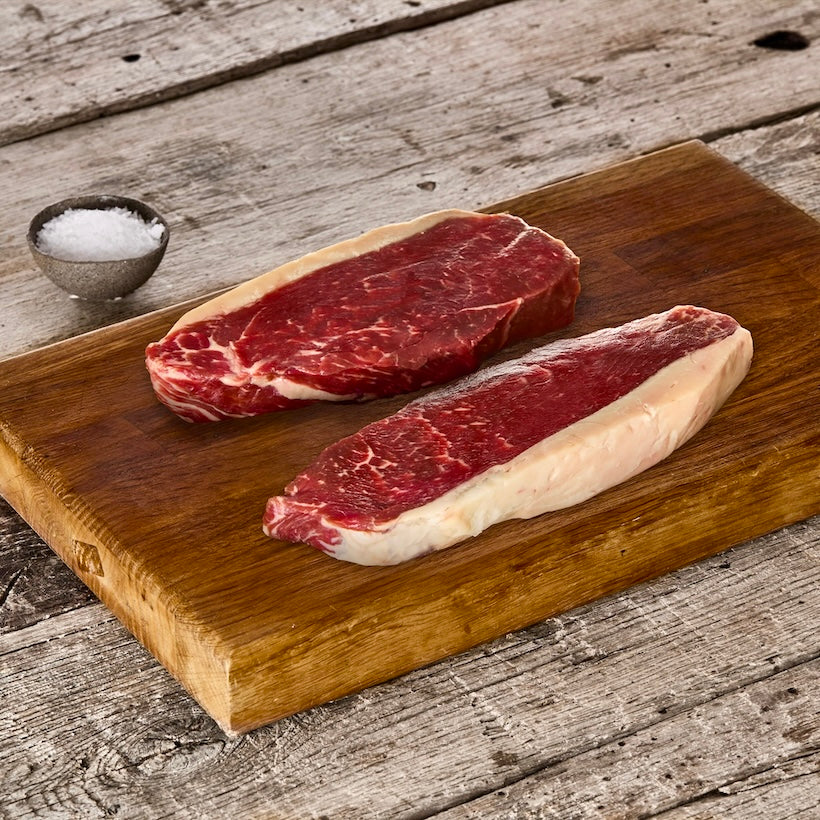
British Beef Picanha Steaks 28 Day Dry-Aged | ±200g x2

Regular price
£21.00
Regular price
£21.00
Sale price
£21.00
Tax included.
2 Serve
North Yorkshire, England Origin
Native and rare breeds Breed
Grass Feed
28 days dry-aged Ageing
Description

Grass-fed picanha steaks are a premium cut of beef prized for their rich flavour and tenderness. This Brazilian favourite comes from the top of the rump and features a signature fat cap that enhances its natural juiciness during cooking. Grass-fed picanha, sourced from cattle raised on a natural diet, offers a deeper, more robust flavour compared to grain-fed counterparts, along with a healthier profile rich in omega-3 fatty acids and antioxidants. Ideal for grilling or roasting, these steaks are a gourmet choice for those seeking sustainable, high-quality beef with exceptional taste.
Browse our delicious pantry products to elevate your dish.

  • Grass-fed British beef, native and rare breeds
  • Reared in North Yorkshire
  • 28 day dry-aged
  • Cut in-house by our own butchers
  • 2 steaks of ±200g each
  • Serves 2
  • Frozen
Cooking Instructions

Dry-Aged Picanha Steaks - Pan or Barbecue

±200g x 2, 28 day dry-aged. Serves 2. Defrost 7–8 hours. Around 7 minutes in the pan.

1. Defrost
Move the pack from freezer to fridge. Leave it in the vacuum pack, on a plate. Allow 7 to 8 hours. Cook within 48 hours of defrosting. Do not refreeze.

2. Temper
Out of the fridge 40 minutes before cooking.

3. Score the fat cap, do not trim it
The layer of fat on one side is the whole point of picanha. Score it in a crosshatch, through the fat but never into the meat, and salt it heavily. Pat the rest of the steak dry.

4. Start fat side down, in a cold pan
Lay the steaks fat side down in a dry pan and then turn the heat on. Starting cold gives the fat time to render out slowly rather than scorching. Give it 3 to 4 minutes, until the cap is golden and the pan is slick with fat.

5. Sear the faces
Turn the heat to high. 2 minutes a side in the rendered fat, turning once.

6. Pull at 52°C
Medium rare. Picanha is cut from the rump cap, which is lean beneath that layer of fat, so it stiffens quickly past this point.

7. Rest
6 minutes on a warm plate. Do not cover tightly.

8. Slice across the grain
Cut across the fibres at 1cm, taking a strip of the crisp fat cap with every slice. Coarse salt is the traditional finish and it needs nothing else. Chimichurri alongside, if you want it.

Nutritional Information
Typical values Per 100g
Energy
Fat
of which saturated
Carbohydrate
of which sugars
Fibre
Protein
Salt
Storage

Delivered frozen
Keep frozen at -18°C until needed. Use by the date on the pack.
Defrost in the fridge, in its packaging, on a plate. Allow 7-8 hours. The pack will release liquid as it thaws.
Never defrost at room temperature or in a microwave.
Once defrosted, keep at 0-4°C and cook within 2 days.
Do not refreeze once thawed.

Delivery

SHIPPING RATES (UK mainland only excl. Highlands)

 Orders over £85 Express By End of Day (Tues-Sat)  FREE
 Orders under £85 Express By End of Day (Tues-Sat)  £8.50
 Express by 1PM (Tues-Fri) / by 1PM for Scotland  £11
 Express Saturday by 1PM / by 1PM for Scotland  £22


Our delivery service covers all UK mainland addresses and is fully tracked using trusted courier DPD.
We aim to deliver all orders, excluding the Highlands & Islands, via next-day service; however, please allow up to 48 hours when placing your order in case of any courier delays.

FAQs
British Beef Picanha Steaks 28 Day Dry-Aged | ±200g x2

  • Yorkshire's Rare Breeds

North Yorkshire is livestock country and always has been. Limestone dales to the west, heather moor to the east, and the broad green vale between them: ground that has always suited grazing better than crops. The grass comes slowly here, thick with herbs and old ryegrass leys, and the cattle come on slowly with it. Cool summers, wet autumns, and no reason to hurry.

It is also where the old breeds survived. Longhorn, Belted Galloway, Dexter, Red Poll, slow-maturing cattle that most of the industry abandoned for faster commercial crosses, kept on family farms and taken to a local abattoir a few miles down the road rather than hauled the length of the country. Slow growth lays fat inside the muscle rather than around it. Twenty-eight days on the bone then draws off the water and concentrates everything else.