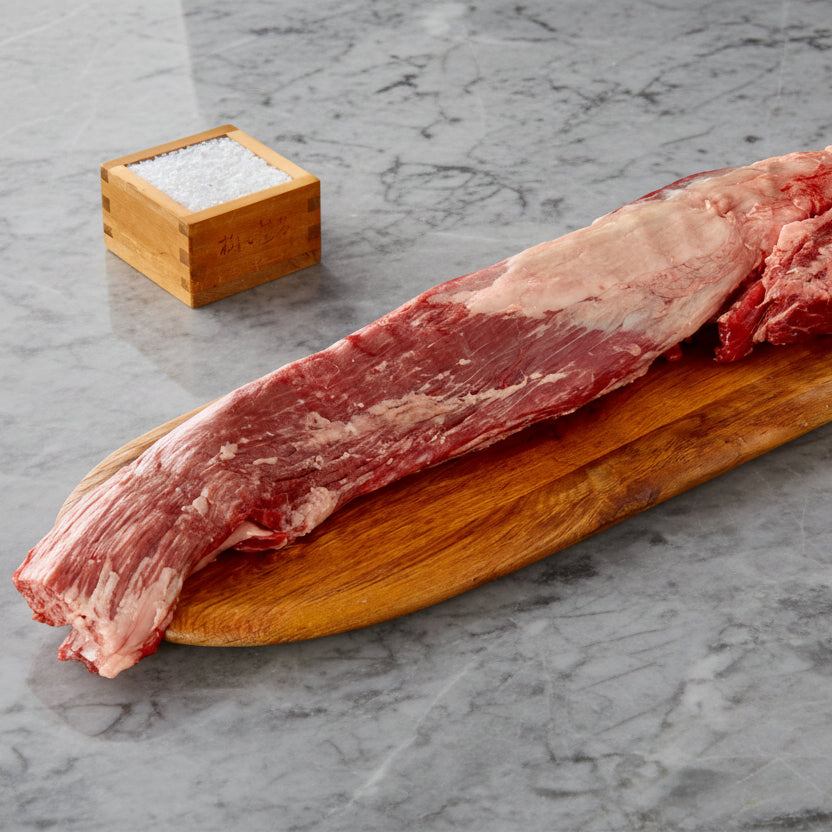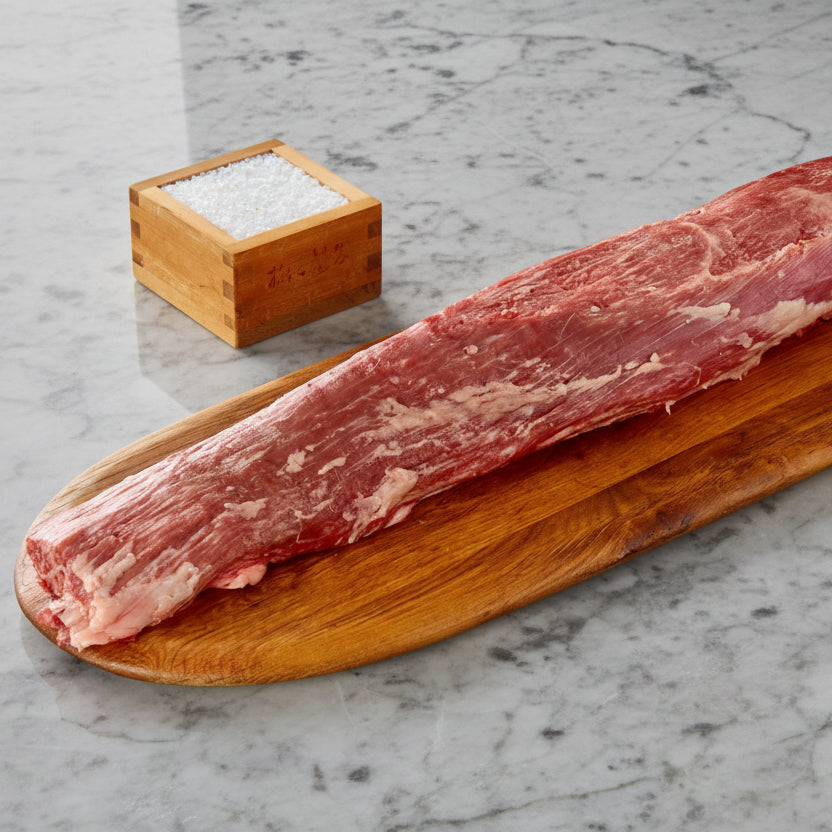

Wagyu Japanese Beef Whole Fillet
- Regular price
-
£390.00 - Regular price
-
£390.00 - Sale price
-
£390.00
Couldn't load pickup availability
Description
The Japanese whole Wagyu Beef Fillet is a pinnacle of culinary indulgence, prized for its exceptional marbling and unmatched tenderness. This cut, known for its buttery texture and rich, umami flavour, is a testament to Japanese beef craftsmanship. Whether prepared as a whole roast or sliced into medallions, each bite promises a luxurious dining experience. Perfect for special occasions or gourmet meals at home, the Wagyu Beef Fillet exemplifies the artistry and dedication that defines Japanese Wagyu beef, making it a true delight for discerning palates.
- Full blood Japanese Black Wagyu (Kuroge Washu)
- Reared in the Kagoshima Prefecture (South of Japan)
- Grade A3, A4, A5 & A5+
- ±3.5kg, ±4kg, ±4.4kg
- Chilled
- The picture shows a Grade A4
We strive for precision with every hand-cut order. Please note that natural variations occur, and we maintain a weight tolerance of ±8%, which is reflected in our pricing. Should a selection fall outside this range, we will contact you directly to ensure your order meets our standards and your expectations.
What is Grade?
Japanese Wagyu grading is a system used to classify the quality of Wagyu beef based on various factors such as marbling, meat colour, firmness, and texture. The grading typically ranges from A1 to A5+, with A5+ being the highest quality, characterised by abundant marbling, tenderness, and rich flavour.
Cooking Instructions
Japanese Wagyu Whole Fillet - Steaks or Châteaubriand
Kagoshima, Grade A3 to A5+. The one Japanese cut that also roasts whole.
1. Fresh or frozen
Check your pack. If it is chilled, keep it at 0-4°C in its unopened vacuum pack and cook by the date on the label. If it is frozen, thaw it in the fridge in its pack, allowing 34 to 40 hours depending on size.
2. Trim it first
Pull away the chain, the thin ropey muscle running along one side, and keep it for a stir-fry. Then slide a thin knife under the silverskin and strip it off in lengths. Silverskin does not render and will pull the fillet out of shape as it cooks.
3. Decide how to break it down
A whole fillet gives you around ten steaks, a Châteaubriand from the thick centre, and the tapering tail. Cut what you want now and wrap and freeze the rest, using it within 12 months. The tail is best sliced thin for a stir-fry or for sukiyaki.
Method A - Steaks (around ten at 150 to 180g, one portion each)
4. Cut across the fillet at 4cm. Temper 30 minutes, pat dry and salt just before cooking.
5. Heavy pan over a medium-high heat. The fillet renders little of its own fat, so add a small piece of beef fat or a scant teaspoon of neutral oil. Sear 2 minutes a face, then roll the steak onto its sides, 30 seconds at a time.
6. Pull at 52°C. The fillet is the one Japanese cut that wants the lower temperature, because there is less marbling here to render. Rest 4 minutes.
Method B - Châteaubriand (reverse sear, for a centrepiece)
4. Tie the centre section at 4cm intervals so it holds an even round. Salt all over and leave it uncovered on a rack in the fridge overnight if you can. Out of the fridge one hour before cooking.
5. Oven at 110°C on a rack over a tray, until the centre reaches 48°C. Allow roughly 30 to 35 minutes per kilo. Go by the probe.
6. Rest 10 minutes, then sear hard and briefly on all sides. Pull at 52°C. Rest 15 minutes, remove the string and carve at 2cm.
Serve it simply. Flaked salt, wasabi, a little soy. A rich sauce fights this beef rather than supporting it.
Storage
If fresh
Keep refrigerated at 0-4°C in its unopened vacuum pack and use by the date on the label. You can freeze it unopened at any point up to that date - at -18°C or below it will keep well for up to 12 months.
If frozen
Keep frozen at -18°C until needed. Use by the date on the pack.
Defrost in the fridge, in its packaging, allow 34-40 hours depending on size. Never defrost at room temperature or in a microwave.
Once opened or defrosted, keep refrigerated at 0-4°C and use within 24 hours. Do not refreeze once thawed.
A faint metallic smell on first opening the pack is normal for vacuum-packed beef and will disperse within a few minutes in open air.
Delivery
SHIPPING RATES (UK mainland only excl. Highlands)
| Orders over £85 Express By End of Day (Tues-Sat) | FREE |
| Orders under £85 Express By End of Day (Tues-Sat) | £8.50 |
| Express by 1PM (Tues-Fri) / by 1PM for Scotland | £11 |
| Express Saturday by 1PM / by 1PM for Scotland | £22 |
Our delivery service covers all UK mainland addresses and is fully tracked using trusted courier DPD.
We aim to deliver all orders, excluding the Highlands & Islands, via next-day service; however, please allow up to 48 hours when placing your order in case of any courier delays.
FAQs
Can I make tartare or carpaccio?
Yes, and a whole fillet is the right starting point — far better than anything pre-diced, because you're cutting from an intact, freshly opened piece with minimal handled surface. Use the centre, trim thoroughly, keep everything cold, and cut by hand rather than mincing.
What should I serve with it?
Very little. Flaked salt, wasabi, a little soy. If you want something more substantial, a simple potato dish and something sharp — pickled vegetables, watercress, a sharp dressed salad — rather than a cream or wine sauce, which will sit on top of the beef rather than under it.
Is this a good choice for someone who finds Wagyu too rich?
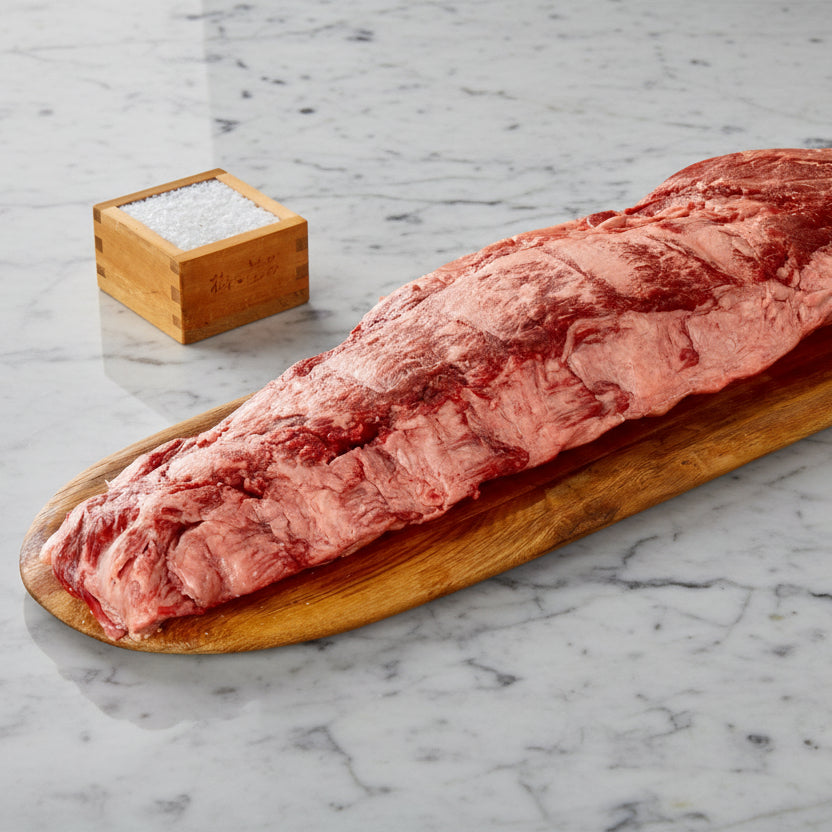
It's the best choice in the Japanese range for exactly that. The fillet is the leanest muscle on the animal, so you get the tenderness and the sweetness with far less of the fat that people find overwhelming in a ribeye.


Wagyu Japanese Beef Whole Fillet
- Regular price
-
£390.00 - Regular price
-
£390.00 - Sale price
-
£390.00
Where Wagyu Began
Kagoshima sits at the southern tip of Kyushu, the last of Japan's main islands before the open sea. It is volcanic country. Sakurajima smoulders across the bay from the city and has been laying down ash for thousands of years, leaving a soil too loose to hold most crops but well suited to grazing and to the sweet potatoes the region is known for. Warm, wet, and a long way from Tokyo.
It is also the prefecture that raises more Wagyu than any other in Japan. The cattle are full-blood Kuroge Washu, bred from registered bloodlines and finished slowly, closer to thirty months than the twenty a commercial animal is given. Every one carries a ten-digit identification number that traces it back to the farm it was born on. Pedigree, time and record-keeping are the whole method. The marbling is what they produce.