

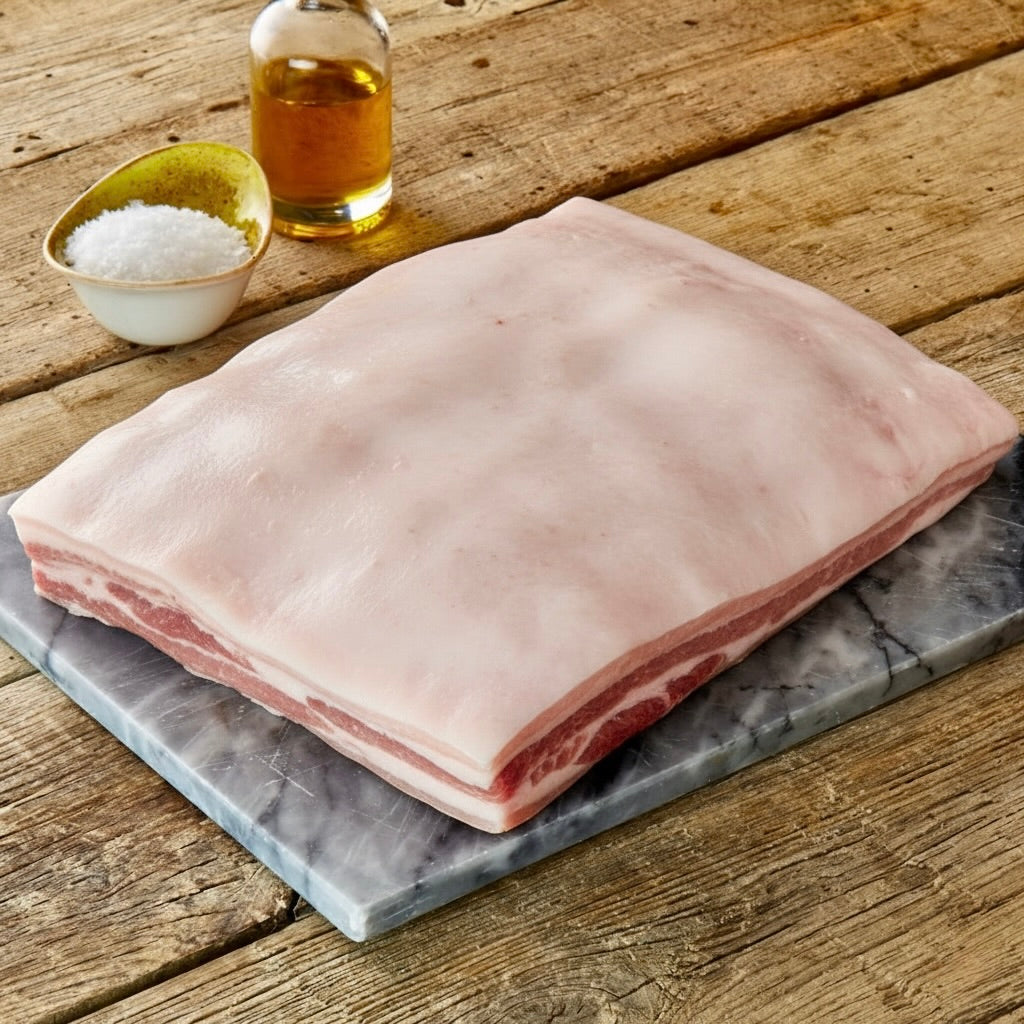
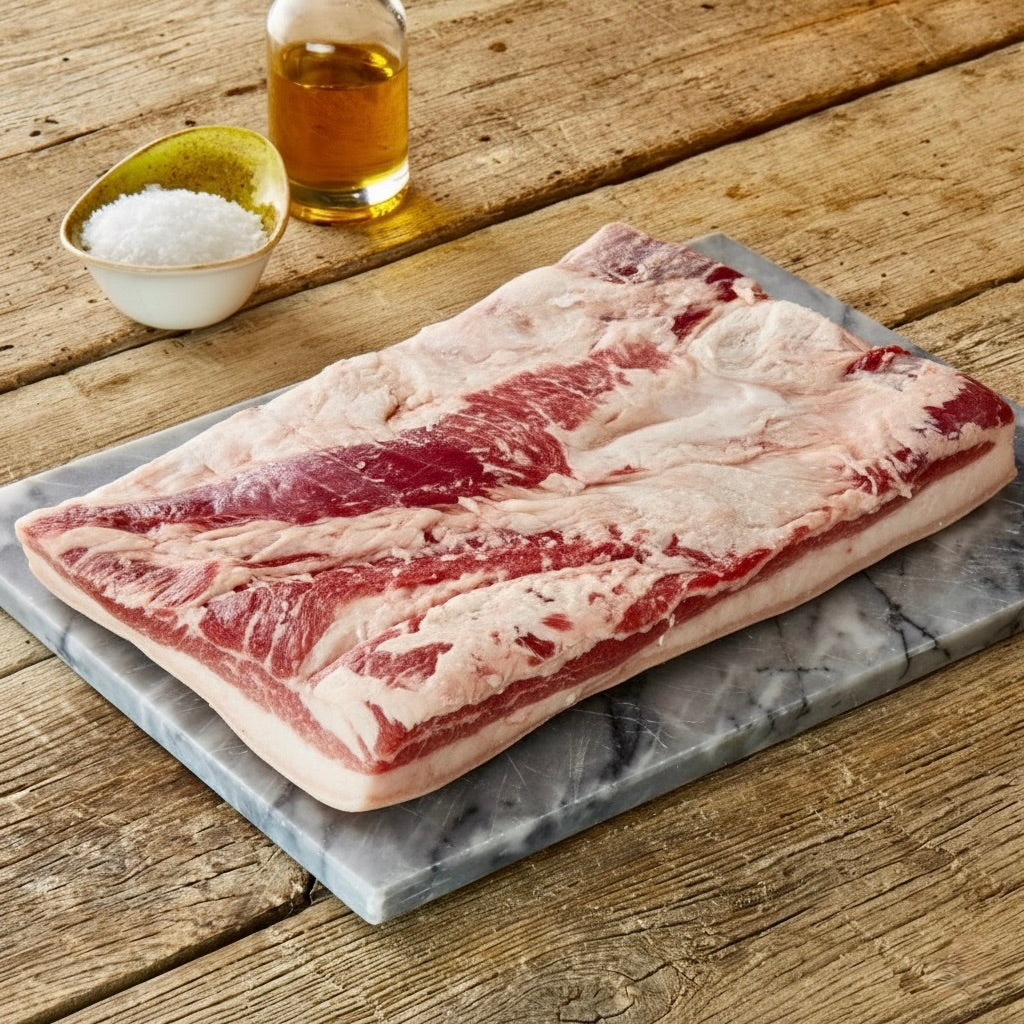
Iberico Pork Belly - Boneless, Skin On | ±3.4kg
- Regular price
-
£42.00 - Regular price
-
£42.00 - Sale price
-
£42.00
FROZEN
Couldn't load pickup availability
Product Description
- Pata Negra breed
- Reared in the Iberian Peninsula, Spain
- ±3.4kg, £12.55/kg
- Boneless, Skin On
- Frozen
-
Extremely fatty cut with a minimum of 80% deliciously flavourful fat
Iberico Pork Belly comes from the underside of the Spanish Pata Negra pigs. The belly is naturally fattier than most other cuts and rich in nutty flavour from the pigs acorn-rich diet.
Please note that the Iberico pork belly is a lot fatter than the average pork belly.
Cooking instructions
Crispy Iberico Pork Belly (3.4kg, boneless, skin-on) — simple step-by-step
You’ll need
• 3.4kg Iberico pork belly, boneless, skin-on
• 2–3 tbsp fine salt (for the meat)
• 2–3 tbsp coarse sea salt (for the skin)
• 1–2 tsp black pepper
• 1 tbsp fennel seeds (optional but great)
• 4–6 garlic cloves, lightly crushed (optional)
• 2 tbsp olive oil (for the meat side)
• 250–500ml water (for the tray)
Equipment
Roasting tray + rack (or sit it on thick onion slices), sharp knife, kitchen paper, foil.
⸻
Step-by-step
1) Dry the skin (best results)
1. Pat the pork belly very dry with kitchen paper.
2. If you can, leave it uncovered in the fridge overnight (skin side up).
(If not, dry it thoroughly and carry on.)
2) Score the skin
1. Using a sharp knife, score the skin in lines about 1cm apart.
2. Try to cut through the skin and fat, but not into the meat.
3) Season
1. Turn the belly meat-side up and rub with: fine salt, pepper, fennel (optional), garlic (optional), and a drizzle of olive oil.
2. Turn skin-side up. Rub the skin with coarse sea salt (this helps draw moisture out and improves crackling).
4) Set up the tray
1. Heat oven to 170°C fan (190°C conventional).
2. Put the belly on a rack (or on thick onion slices) in a roasting tray.
3. Pour water into the tray (not onto the pork) so it gently steams underneath and stops the drippings burning.
5) Slow roast (tender meat)
1. Roast for 3 hours at 170°C fan.
2. Check the tray halfway and top up water if it dries out.
6) Crisp the crackling
1. Remove the pork. Tip off excess fat/liquid from the tray (carefully).
2. Brush the skin lightly to remove any wet patches of salt, then pat dry again if needed.
3. Turn oven up to 220°C fan (240°C conventional).
4. Roast for 25–40 minutes until the skin is deeply crisp and blistered.
7) Rest, then slice
1. Rest 20–30 minutes (this keeps it juicy).
2. Slice with a serrated knife or very sharp knife.
⸻
Quick doneness guide
• You want the meat very tender and the fat soft/gelatinous after the slow roast.
• If it still feels firm after 3 hours, give it another 30–45 minutes before crisping.
⸻
Serving ideas (simple)
• Classic: roasted potatoes + greens + apple sauce
• Tacos/buns: shred the meat, crackling on top, quick slaw
• Asian-style: serve with rice, cucumber, and a soy + vinegar dip
If you tell me whether you want it sliceable like a roast or pull-apart (more like porchetta-style texture), I’ll tweak time/temps slightly.
Delivery
SHIPPING RATES (UK mainland only excl. Highlands)
| Orders over £75 Express By End of Day (Tues-Sat) | FREE |
| Orders under £75 Express By End of Day (Tues-Sat) | £8.50 |
| Express by 12PM - Noon (Tues-Fri) | £11 |
| Express Saturday by 12PM - Noon | £22 |
Our delivery service covers all UK mainland addresses and is fully tracked using trusted courier DPD.
We aim to deliver all orders, excluding the Highlands & Islands, via next-day service; however, please allow up to 48 hours when placing your order in case of any courier delays.
Iberico Pork Belly - Boneless, Skin On | ±3.4kg
- Regular price
-
£42.00 - Regular price
-
£42.00 - Sale price
-
£42.00
SPAIN
The Iberian Peninsula of Spain, is a land of rich history and stunning natural beauty. Here, amidst rolling hills, ancient forests, and sun-drenched plains, lies the home of the renowned Iberico Pork. In the extensive oak forests, known as "dehesa", the Pata Negra pigs are allowed to roam freely, feasting on acorns and other natural vegetation, which contributes to the unique flavour and marbling of the meat.